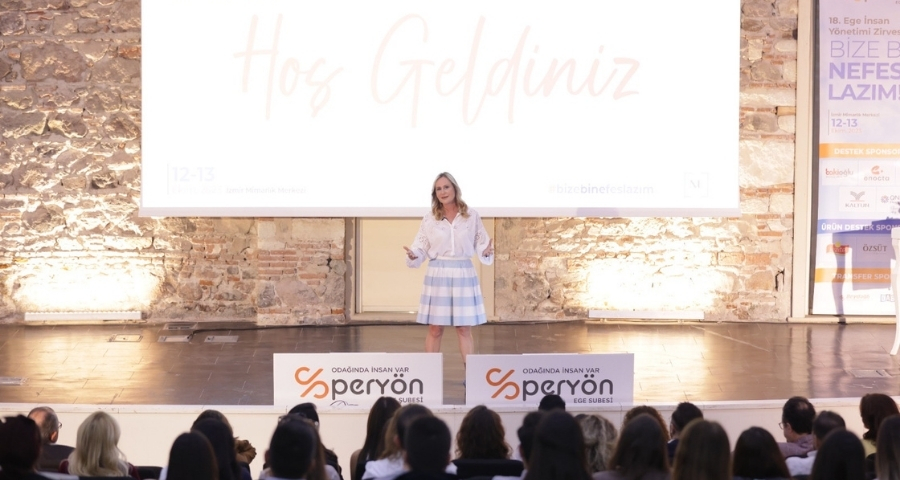
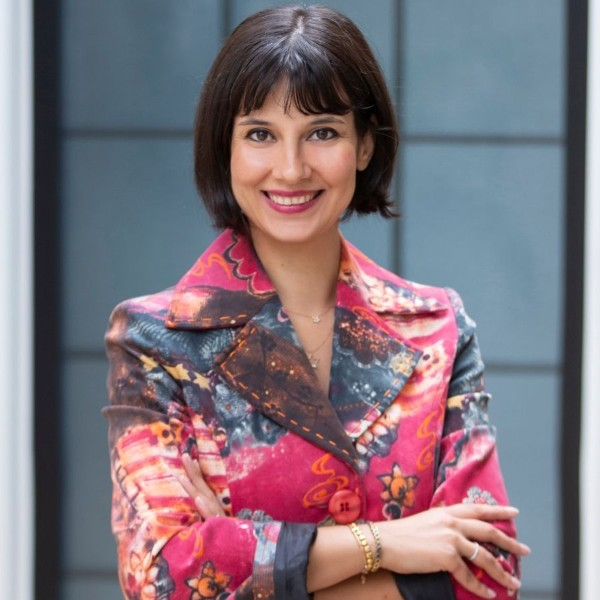
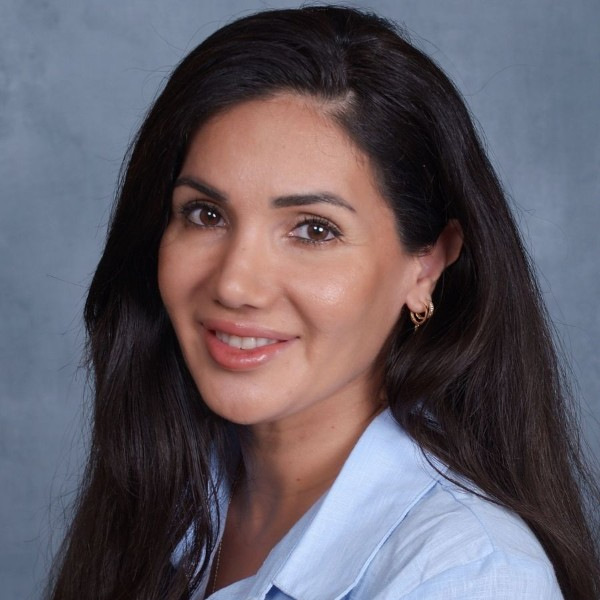
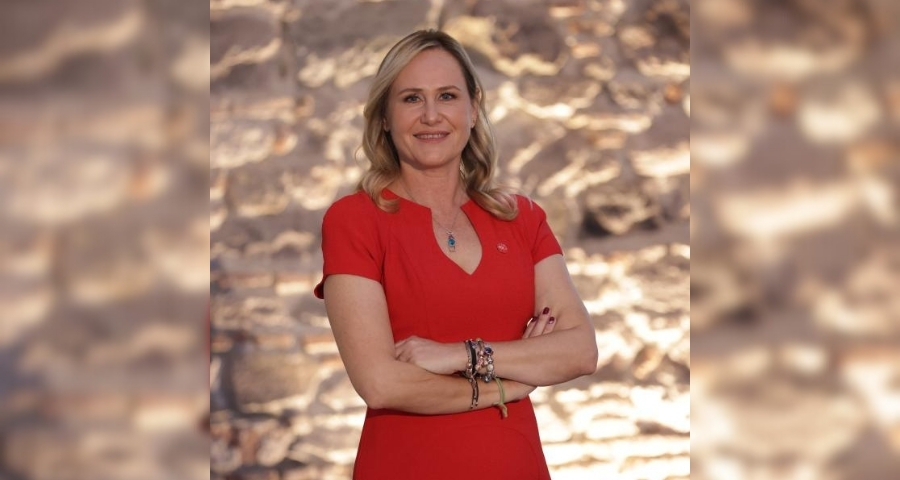
Ece Süeren Ok

Wellbeing and Strategic HR Consultant
MC Host, Speaker

Wellbeing at Work / Corporate Wellbeing

Burnout Syndrome, which was classified by the World Health Organization as an occupational phenomenon before the pandemic, has become an even more widely discussed topic since the pandemic. Companies that develop sustainable and innovative initiatives in this area gain a competitive advantage in the war for talent.

Wellbeing programmes, now among employees’ top three expectations from organisations, will continue to grow in importance in the coming years. With our speaker, who was among the first to introduce the concept of corporate wellbeing in Türkiye, you can explore the subtle distinction between wellness and wellbeing and discover, through practical examples, how holistic wellbeing influences employee engagement and productivity.

Women Leaders

The qualities commonly associated with feminine leadership—collaboration, harmonious teamwork, effective communication, valuing relationships and nurturing development—are also among the key competencies of agile leaders.

Thanks to their high emotional intelligence, women leaders are often highly successful in agile leadership. Nevertheless, women hold only 3% of senior leadership positions within organisations.

Contrary to the approach commonly encouraged until now, imitating and adopting the leadership characteristics of male colleagues can hinder women as they progress through the leadership ranks. Which habits and behaviours should women let go of?

How Are Five Megatrends Reshaping the Talent Ecosystem for Today’s Leaders?

Based on PwC’s Five Megatrends studies, first published in 2013 and updated in 2023, this talk explores the key contexts leaders need to consider when managing their talent ecosystems:

  • Megatrend 1: Climate Crisis and Mobility
  • Megatrend 2: Technological Developments
  • Megatrend 3: Demographic Change
  • Megatrend 4: Social Inequality
  • Megatrend 5: A Divided and Fragmented World

These themes are examined through the perspectives of diversity, inclusion, talent loss and what it means to remain human in an increasingly digital world.

Trust

  • What is trust, and how is it built?
  • The three pillars of trust: logic, authenticity and empathy
  • The relationship between trust, safety and psychological safety

Megatrends and the Talent Ecosystem

  • What is a megatrend?
  • Major global megatrends
  • The interaction between megatrends and the talent ecosystem
  • Their impact from the employee perspective
  • Their impact from the employer perspective
  • Their impact from the perspective of countries and economies

The Possibility Mindset

  • Stoic philosophy and the possibility mindset
  • Positive psychology
  • The PERMA model
  • The six virtues and 24 character strengths

When I set out on a sea voyage, I choose the ship, the captain and the season. That is my responsibility. If a storm arises during the journey, I do not concern myself with it, because that is not my responsibility. Choosing the captain is within my control; dealing with the storm is the captain’s responsibility.

This training explores Martin Seligman’s PERMA model in detail and provides participants with practical ways to move beyond a victim mentality and learned helplessness.

By focusing on what is within our control and striving for the best possible outcome within our sphere of influence, participants will learn to move away from toxic positivity and take meaningful action. Through a range of practical models, the training supports participants in developing individual action plans and reshaping their mindset.

Rest

  • What is rest?
  • Burnout and rest
  • Why are we unable to rest?
  • Types of rest, practices and recommendations

Everyone is busy. Calendars are full, one Zoom meeting follows another, and there are projects, children, shopping, friends, elderly family members, exercise routines, garden maintenance and chaotic traffic. The list is endless. We need rest—but how do we truly rest?

The Holy Grail: Rest

Our bodies need both active and passive forms of physical rest. Active rest helps release the tension created by intense work, while passive rest allows us to restore our energy and support the body’s recovery.

Intentional downtime is the space in which we recharge and prepare ourselves for another day. By disconnecting from electronic devices and constant sensory stimulation, we can benefit from sensory rest. Without genuine downtime, it is impossible to sustain an energetic and fulfilling life.

Every conscious pause from the ordinary activities that gradually drain us offers the gifts of release, freedom and renewal, allowing us to restore our energy.

Building Connections Across Generations

  • The characteristics and values of different generations
  • Differences between Baby Boomers, Generation X, Generation Y and Generation Z
  • The social, economic and technological influences that shaped each generation
  • The values, motivations and expectations of each generation
  • Communication styles and preferences
“Human or Algorithm—or a New Partnership?”

  • The paradigm shift in the business world
  • The role of AI in HR: from automation to augmentation
  • The Human + AI operating model
  • Emerging critical skills:
    • Decision-making
    • Ethical judgement
    • Empathy
  • “The future of HR is not about technology; it is about rediscovering the human being.”

“Data Speaks, but Humans Create Meaning”

  • The evolution from HR analytics to predictive and prescriptive analytics
  • AI-supported decisions in recruitment, performance management and retention
  • The risk of bias and the ethical questions it raises
  • Moments when the human touch remains critical
  • Case study: the cost of misinterpreting data

“The New Role of HR: From Technology User to Systems Architect”

  • Using AI tools versus designing organisations with AI
  • Redesigning jobs and ways of working
  • From job crafting to role redesign and work architecture
  • The new questions HR must ask:
    • Should this task be performed by a human?
    • How should humans and AI work together?

“Wellbeing 2.0: Staying Human in the Age of Artificial Intelligence”

  • Digital fatigue and cognitive overload
  • AI-accelerated working life and the stress paradox
  • Redefining wellbeing:
    • Mental clarity
    • Meaning
    • Boundaries
  • A call to HR: “The goal is not merely performance, but sustainable human potential.”

“Careers in the Age of AI: Jobs Are Not Disappearing—Skills Are”

  • Skills-based organisations
  • Upskilling and reskilling
  • Learning agility as the most critical capability
  • From career paths to career portfolios

“Ethics, Trust and Transparency: The Invisible Risks of AI”

  • Algorithmic bias
  • The transparency challenge
  • The crisis of trust
  • The role of HR in establishing an ethical framework

You can reach us by phone at +90 530 236 42 99 or contact us via email at [email protected].

The Art of Feedback

Programme Objective

This programme provides practical guidance on the points to consider before, during and after giving feedback. By learning how to use feedback as an effective development tool, managers will gain a powerful method for supporting performance improvement.

Programme Content

  • Communication styles
  • What is feedback—and what is it not?
  • How to give effective feedback
  • Performance management through real-time feedback
  • Managing difficult conversations

Duration

1 day

Who Should Attend?

The programme is open to employees at all levels of the organisation.

The Five Languages of Appreciation in the Workplace

Programme Objective

As Stephen Covey stated, after physical survival, the greatest human need is psychological survival: to be understood, accepted, validated and appreciated.

Based on the approach developed by Gary Chapman and Paul White, authors of The 5 Languages of Appreciation in the Workplace, this programme aims to share meaningful and practical methods for creating a culture of appreciation, strengthening employee motivation and increasing organisational commitment.

Programme Content

  • The importance of appreciation
  • The five languages of appreciation
  • Using the languages of appreciation
  • Making appreciation practices sustainable

Duration

1 day

Who Should Attend?

The programme is open to employees at all levels of the organisation.

Wellbeing at Work

Programme Objective

Through this Wellbeing and Mindfulness programme, employees will gain a deeper understanding of how positive thinking can contribute to positive outcomes and a healthier mindset.

Participants will explore their nutritional habits, become more aware of their individual behavioural choices and understand how these choices influence their performance.

Practical exercise tips will help participants restore their energy and physical vitality in the workplace. By recognising their existing habits, they will also develop simple daily rituals that can create meaningful changes in their lives.

Who Should Attend?

The programme is open to employees at all levels of the organisation.

To ensure that wellbeing practices can be integrated across the organisation and sustained over time, a two-day preliminary strategy workshop with the HR team is recommended.

Requirements

  • Access to a gym at the training venue, or a sufficiently spacious training room
  • A selection of refreshments throughout the day that supports healthy and clean eating

Number of Participants

A minimum of 6 and a maximum of 20 participants may attend the programme.

Duration

  • 2.5 days
  • One-to-one 45-minute follow-up session after 21 days
  • One-to-one 45-minute follow-up session at the end of the month

Benefits

Prepare to introduce new and sustainable habits across your organisation through wellbeing and mindfulness practices—and open a new chapter in organisational performance.

Agility and Women Leaders

Programme Objective

The following qualities, often described as feminine leadership characteristics, are also among the essential competencies of agile leaders:

  • Working collaboratively and harmoniously
  • Effective communication
  • Valuing, nurturing and developing relationships

Women leaders are often highly successful in agile leadership due to their strong emotional intelligence. Nevertheless, women hold only 3% of senior leadership positions within organisations.

Contrary to the approach that has traditionally been encouraged, modelling and copying the leadership characteristics of male colleagues may hinder women as they progress through the leadership ranks.

This programme enables women leaders to use their strengths without suppressing them and to create synergy through differences.

Programme Content

  • Self-awareness
  • Next-generation leadership and servant leadership
  • Your individual leadership characteristics
  • The role of personal qualities in leadership development
  • Habits we need to let go of
  • My sphere of influence and personal impact
  • Developing new habits
  • My personal leadership brand

Duration

2 days

Megatrends and the Talent Ecosystem

Programme Content

  • What is a megatrend?
  • Major global megatrends
  • The interaction between megatrends and the talent ecosystem
  • The impact from the employee perspective
  • The impact from the employer perspective
  • The impact from the perspective of countries

The Possibility Mindset

Programme Content

  • Stoic philosophy and the possibility mindset
  • Positive psychology
  • The PERMA model
  • The six virtues and 24 character strengths

When I set out on a sea voyage, I choose the ship, the captain and the season. That is my responsibility. If a storm arises during the journey, I do not concern myself with it, because that is not my responsibility. Choosing the captain is within my control; dealing with the storm is the captain’s responsibility.

This programme explores Martin Seligman’s PERMA model in detail and introduces practical ways to move beyond a victim mentality and learned helplessness.

Participants will learn to focus on what is within their control and work towards achieving the best possible outcome within their sphere of influence.

Moving away from toxic positivity, the programme uses a range of practical models to help participants reshape their mindset, take meaningful steps and develop individual action plans.

Rest

Programme Content

  • What is rest?
  • Burnout and rest
  • Why are we unable to rest?
  • Types of rest, practices and recommendations

Everyone is busy. Calendars are full, one Zoom meeting follows another, and there are projects, children, shopping, friends, elderly family members, exercise routines, garden maintenance and chaotic traffic. The list is endless.

We need rest—but how do we truly rest?

The Holy Grail: Rest

Our bodies need both active and passive forms of physical rest.

Active rest helps release the tension created by working intensely, while passive rest restores energy and supports the body’s recovery.

Intentional downtime allows us to recharge and prepare for another day. By disconnecting from electronic devices and constant sensory stimulation, we can experience the benefits of sensory rest.

Without genuine downtime, it is impossible to maintain an energetic and fulfilling life.

Every conscious pause from the ordinary activities that gradually drain us offers the gifts of release, freedom, change and renewal, allowing us to restore our energy.

Building Connections Across Generations

Programme Content

  • The characteristics and values of different generations
  • Differences between Baby Boomers, Generation X, Generation Y and Generation Z
  • The social, economic and technological influences that shaped each generation
  • The values, motivations and expectations of each generation
  • Communication styles and preferences
 

Experience:
Freelance Management Consultant, Coach & Keynote Speaker
Currently working as management consultant- mainly human resources and leadership development (HR policy & procedures, career management, succession management, employer branding,leadership and employee experience development) since May 2018

Coca-Cola -Turkey
Human Resources Director
Nov 2017 – May 2018
Responsible from HR strategy and execution of HQ and 10 Manufacturing plants of CCI Turkey.
(HS ; Operational Excellence, Security falls under HR scope in CCI)

Management Centre Turkey (MCT)
Consultant & Coach
Sep 2015 – Nov 2017

JTI – June 1992 – May 2015
HR& Admin Director – Feb 2007-May 2017
Responsible from HR strategy and execution of 3 legal entities of JTI in Turkey.
Recruitment & Development Manager – May 2005 – Feb 2007
Responsibilities include, selection & recruitment activities as well as analyzing, developing and executing Individual Development Plan process leading to internal talent pool utilization and an operational career planning & succession management for all market, factory, distribution network.
Training & Management Development Manager – Apr 1999 – May 2005
Responsibilities include, analyzing, developing and executing JTI Turkey Training and Development strategies for JTI and the Distribution Network personnel, implementing Individual Development Plan process leading to internal talent pool utilization and an operational career planning & succession management.
Training & Development Supervisor – Jun 1997 – Apr 1999
Responsibilities include, organizing & delivering Classroom trainings to RJR Turkey & distribution network according to training needs analysis and organizing all outsourced trainings, running Issue Handling Sessions and creating , adapting new programs.
Training Specialist – Apr 1996 – Jun 1997
Responsibilities include, organizing & delivering Classroom trainings to RJR Turkey & distribution network according to training needs analysis , organizing all outsourced training programs & keeping all Training Programs updated while issuing all departmental reports.
Training Assistant – Apr 1995 – Apr 1996
Responsibilities include, organizing all Classroom trainings, keeping all training related database
Secretary / Assistant Human Resources – Oct 1992 – Apr 1995
Responsibilities include, assisting HR Director while working with Human Resources & Administration Supervisors on running all payroll, health insurance & administrative is

Education:
Marmara University (1996-1998)
MBA- Marketing Major
University of Istanbul (1988 – 1992)
BA – Economics (English section)

Memberships:
EGE PERYÖN İnsan Yönetimi Derneği
IODA Turkey (International Organizational Development Association)
TurkishWINN Member
ZIN Member (Zumba Instructors network)
USSK – (Üsküdar Su Sporları Kulübü) Aquamaster Swimmer

Media Gallery

Contact us now to book our speakers for your next event.
Agility, Artificial Intelligence, Business World & Future of Work, Employee Engagement and Experience, Generations, Healthy Living / Wellness, Human Resources, Leadership and Teamwork, Mindfulness, Resilience, Storytelling

Speakers on Similar Topics

Hasan Başusta
Digital Transformation & AI Strategist, Keynote Speaker, Consultant
Olivia Manzagol
Expert in Energy, Artificial Intelligence, Sustainable Finance, and Public Policy
Oya Geron
Trainer, Speaker, and Change Experience Designer
Ece Çiftçi
Dr. Ecmel Ayral